
Review: 'Stone Free' by John Ogden
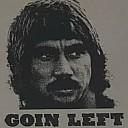
'Stone Free' by John Ogden is the latest in an infrequent genre of storytelling that began with the film 'Sea Of Darkness', hit unexpected scholarly highs with ‘Thai Stick’, exposed the Coronado Company in ‘Deep Water’, continued through the glossy pages of ‘Grajagan’, which gave way to this story, the life of surfer/smuggler Warren ‘Abdul’ Anderson who figured in all the other films and books.
Together you might call them Scammer Romanticism, maybe Smuggling Realism, but they all concern themselves with the period from the late-sixties to early-eighties - later in the case of Sea of Darkness - and the surfers who didn’t just wish for endless travel and perfect waves but made those dreams reality by smuggling drugs.
Among the aforementioned books, Stone Free is unique in that it’s a biography, tells the tale of just one person, however it’s indicative of just how small the smuggling world was as almost every other name that appears in the other works, also appears in Abdul’s story.

Prior to becoming Abdul, Warren Anderson was the son of an Australian model and a US fighter pilot, raised in Los Angeles with boy scouts and marching bands before surfing and the sixties counterculture offered him a path out of middle-class conformity. The book situates Abdul in that weird intersection where Timothy Leary's acid evangelism met surfing's outlaw fringe, where Miki Dora crossed paths with Charles Manson, and where the Brotherhood of Eternal Love was turning Laguna Beach into southern California's drug capital.
It’s all very alluring and dangerous, and knowing how everything fell apart, it’s open to moralising too.

What Ogden does well - and this is worth emphasising - is avoid romanticising the lifestyle. Aiming for the middle ground, the writing can at times be matter-of-fact, yet descriptions of the world as it was back then more than makes up for it.
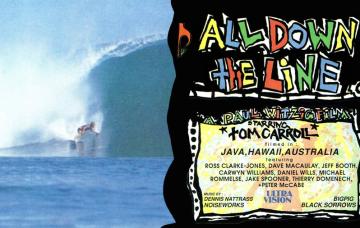
Abdul spent time in Nepal and Afghanistan chasing bigger scores, eventually landing in Bali in 1972 when Kuta was still a sleepy village trying to forget Suharto's communist purges. Unlike, say, Alby Falzon’s paradisical rendition of early-seventies Bali, as seen in Morning Of The Earth, lurking in Abdul’s world were trapdoors and stagehooks. It was high-stakes smuggling with real consequences.
The Grajagan discovery is documented with the kind of detail that should settle old arguments. Having published the book ‘Grajagan’, Ogden has undertaken the sort of research that separates history from carpark mythology.
By the late-seventies, any semblance of honour or respect had leached out of the smuggling game as the original scammers - all of whom were pacifist throwbacks to the Vietnam War - were replaced by violent career gangsters, while cocaine replaced marijuana as the smugglers drug of choice.
Even the most footloose smuggler has a desire to settle down, put down the roots, maybe start a family, and Abdul wasn't impervious to the pull. However it comes at a time when darker elements intrude upon the smugglers' once-idyllic lifestyle. Before long, Abdul's in deep and his life has become complicated.
Ogden doesn't shy away from the choices his subject made. The book chronicles Abdul's entanglement with the Coronado Company and his eventual capture by the DEA, which was building its reputation by chasing surfer-smugglers across south-east Asia. Reading about Abdul's 25 federal prisons and negotiating life inside, you're reminded that living untethered had a price that went beyond poetic.

'Stone Free' is a three-part act and in each part the narrator has a different name: Warren Anderson, Abdul, and Blackie, his prison nickname. Three identities for one person. That tells you something about the shape-shifting required of a long-time smuggler. It might also cause you to second guess the record of events.
The writing is engaging throughout, though at times I wonder if Ogden could've pushed harder on certain questions. Even if it may be dubious in parts, 'Stone Free' is a great crime tale about a vanished world, filled with characters who no longer exist, and an industry that’s become unrecognisable to what it was.
// STU NETTLE
Comments
Things almost always seemed to turn out badly for people like that. Was it worth it?
Wayne Cleveland seems to have become a celebrity anti-hero.
Plenty of them had no troubles.
You only hear the stories of the people who got caught
Too true
Agree, there are stories from multiple sources about how people set themselves up in the early days in mysterious ways!
Don’t know about international stuff, but where I lived in the 90s there were a solid handful of guys who had the lot - land, four-wheel-drive, motorbike, all through being a grower.
I can imagine this would have been and still would be super common all around Australia.
Yes that as well AndyM - more from the barn
I was more thinking about the guys who were going to places like Thailand, Afghanistan, Turkey etc and bringing drugs across international boarders. Those guys were nuts.
Yes, however, a mate drove back home from the Uk, through Turkey and Afghanistan all the way to Singapore and another spent 18 months in India and Pakistan including needing to stay in a Buddhist monastery for a couple of months because of snow, both weren’t into drugs at the time but I only tell this story to highlight that all these countries were once freely open and relatively safe for westerners
I was more talking about taking drugs across international boarders rather than the safety of those particular countries.
Agreed Spuddups, that would take some real cojones.
"Smuggling Realism" - LOL!
On a tangent, it seems to me that we're a massively conformist society - I wonder if we'll ever see anything again to match the cultural revolution of the 60s.
I was thinking of the relative freedom that influencers and digital nomads have but surely at the same time they're 100% part of the mainstream.
I can't think of any western subculture that is even remotely revolutionary.
Squatters?
Real hippies (as opposed to fake ones)?
Avoiding paying tax/money laundering is the new smuggling.
Plenty people out there paying virtually zero tax and living the high life
For sure, but is there anything resembling a cultural revolution in our future?
The cultural revolution is here already, the kids don’t want to work the 9-5, they want to get their money via YouTube, influencing, developing an App or just anything that involves good coin for little work. Grinding out a traditional career in say law, engineering or medicine is for losers.
Find a way to avoid tax/money launder said career and you’re the hands down winner
i think you're oversimplifying it a bit too much. the game has changed and the kids don't want to work a 9-5 because there is no pot of gold at the end of that grind anymore. there's no house to own with a lawn and a white picket fence. there's a 45m2 apartment with a 30+ year price tag 30 minutes inland. who wants to sign up for that?
I reckon that 95% of the kids who expect some economic miracle to drop from the sky get into their 30s and see the error of their ways.
There are 3 doctors in their late 20s on my trivia team and they're killing it in life. Their mates who are no less intelligent but are still living at home obsessing about Charlie Kirk and/or the minutiae of Ukraine are going nowhere.
Sovereign Citizens are the new Counter Culture Crew
Sovereign Citizens that want all the trappings that come from infrastructure paid for with taxes?
Nup, SC's are just another bunch of bludgers.
lol, Sovereign Citizens are the detritus of society. At least drug smugglers provided a service and a product. SC’s want all the benefits of a modern society whilst giving absolutely nothing back in return. Except their insane, uninformed opinions. Complete scum.
What about the dope growing culture on the Northern Rivers.
The 'green $' has had a massive effect on peoples lifestyles and the economy.
I could easily count 100 houses in my area which were fully or partially financed by the 'green $''. Then there's the flow on effect to the people who built these houses. I have had a few building jobs where I was paid with ''green $'', I used this money to build my own house and support my lifestyle where I was free to surf whenever the waves were good.
What ended up happening was, the ''green $'' allowed people to become free to pursue a more creative lifestyle, people put more energy into their gardens, people had time to do volunteer work, people spent more time getting into music, art and crafts.
Another aspect of the "green $ economy" were the annual helicopter raids.
A neighbor of mine got raided, he runs off and hides in the bush, the cops come into his property and confiscate his plants and that's it, no fine, nothing, and most importantly no criminal record.
Another interesting thing is, since covid the helicopter raids have stopped.
The way people got around getting busted by the Helicopters was to set up indoor outdoor systems,
A neighbor of mine had a garden shed with hidden wheels on the inside, if the choppers were in the area he would just open the shed doors and push the shed over the plants.
The biggest and best indoor/outdoor setup I ever saw was when I was in the local volunteer fire brigade.
We went to a fire on a large remote property and there were several big windowless tin sheds all with a big roller door at one end, adjacent the roller door were well worn tyre tracks which stopped about 30 metres from the door. It seems like they had all their plants on a trailer and it got towed out into the sunlight each day. The shed also had a large diesel generator in an open corner which would be supplying power to growing lights and fans.
Love this!
That’s what I’m talking about.
For those who do a job fundamentally based around community service and who pay full tax are utterly laughed at by the green $ mob.
Who’s the winner?
The tax payer obviously, morally
IT's worth noting the ''green $'' economy on the Northern Rivers has been in existence for 50 plus years.
One way of looking at it is as a social experiment, where the results are, no mortgage slavery and no rent slavery.
It is a model for the future if people want it to be.
The final step for the ''green $'' economy would be to legalize cannabis and set up a cooperative similar to how Norco works for dairy farmers.
Each land holder would be allowed to grow say 20 ounces which they sell to the co-op and then pay a tax to the government. GST good shit tax.
Good theory but as far as I can see, any decriminalisation of pot will be for the benefit of big corps.
Too many mates and too much money to be made to turn it over to the plebs unfortunately.
Exactly.
A possible pathway to change would be to demand a government election system where we get to vote on issues and not political parties.
Problem is, like you say the corporatocracy would not allow it.
The Gen X’ers haven’t missed out either, just done it via property investment, the stock market and crypto. Nobody’s looking to work for a living and pay full tax…that’s for the foolish
Wow, this all sounds so idyllic.
I can tell you it’s not if you get busted.
I’m not saying that from personal experience, I’m saying it from observation.
I sat in the Lismore district court for three years documenting different crime stories.
The two most dominant form of proceedings were sexual assaults, and drugs offences.
I’ve seen middle-aged family men get locked up for decent spells growing and distributing cannabis.
The consequences are not pretty.
It was pretty idyllic around my neck of the woods, those fellas would just fish and surf with no boss in sight.
Never any concern about Johnny Hopper the copper, I think in the late 80s and well into the 90s there was so much smack around that the cops weren't too worried about a few growers.
Seemed like the bigger concern was finding somewhat trustworthy crew who would buy wholesale and wouldn't rip you off, potentially at the point of a gun.
Loving the reviews lately on here, looking forward to reading this, thanks Stu.
Hear hear on the reviews. Really good stuff. That was another cracker.
Don’t mind a review, in general, in a vague sorta way. Always had the impression that some people really dig them, look at them very much as an art in and of themselves. In that context I kinda thought freeride’s more long form piece on, you know, that book, was something of a chef d’œuvre. If we are reviewing reviews.
Watched ‘Channel Man’, just released on YT, earlier on. Dug up the review. Remembered I enjoyed it but had completely forgotten the details. What a great complement to the excellent film. Reflected much of what was going through my mind while watching, only in a much deeper, much more insightful and better articulated manner.
sweet .
looks like they only ship to Australia, though.
edit:
found another distributor, Harry Hartog Booksellers, ships to US
Hi Watt,
At this stage the advance edition is only available in Australia as we are still looking for the right publisher for the US rights and don't want to complicate the deal. There are a small number available through our American distributor, Chatwin books in Seattle, so as to get the word out there and you may be able to get one there: https://www.chatwinbooks.com/international-publications
thank you.
How about UK/Europe?
Same applies to those markets at the moment. Hoping to have some progress in the new year. Publishing world wide is in trouble and it is difficult to get agents to even respond let alone take up authors not known in those domains.
Great write up. Cheers.
Anyone old enough to remember the early to mid-seventies when an ounce of pot cost $30.
The main supplier back then were the Italian farmers out at Griffith.
Back then a new Jackson surfboard cost $90 and the most expensive surfboard you could buy was a Gerry Lopez lightning bolt, shaped under contract by Barry Bennet, a mate of mine bought one from the Gordon and Smith surf shop in Hurstville, cost $107.
Yep and a Buddha stick which was sticky heads skewered on a bamboo sliver wrapped with twine bought in from SE Asia was 10 bucks and as good as its travelling hashish companion- other worldly.
At least I think I remember! Surfer smugglers were demigods as a kid
Yep and acid was 9 bucks a trip...
In my country the real Panama Red was USD $2 a pound ,cocaine was USD $5 a gram and mushrooms where free. You didn't need the acid although it was available. Lost a lot of good friends to all that madness. RIP surf brothers.
sounds right, a surfboard costing a labourer's weekly wage..
50 years ago, when a labourer earned $120 a week,
everything was 10% of prices today.
Except houses of course.
And durries.
$4 in my day and you could cut them in half. Value! whether that's good or bad is debatable.
It had a transformative effect on John Lennon, and the future of music, and people like Richard Alpert (aka Ram Dass) a colleague of Timothy Leary.
Suppose someone in customs had a crush on a girl...
Alternative ...
Stu's thoughtful review has provoked a lot of interest in Abdul's story. It's hard for independent publishers to get the word out there and finding the right contacts in the US is a minefield, but the reader feedback has been excellent. It seems that word of mouth will be way this book gets attention. Anyone who read the McCoy/Ritter Grajagan book (and Stu's "Graj Match" story) or enjoyed the doco 'Sea of Darkness' will get a kick out of reading this account of the Boyum story.
Loving it, Oggy, cheers. I am only just up to the Grajagan chapter.. do you want feedback re any spelling or slips? I haven't been noting any, but recall there was one on pp. 64 and 80 and an odd 'southwest' on 84 re laverty trip.. (if it's too late to make changes before any 'next stage' I'll just shut up ; )
Just finished reading it.
It most similar to the Thai Stick book (same places and people basically) but better written.
great read. born into wealth and privilege but never wanted to do an honest days work. Speaking of cajones, how about sailing a hobie to G-land...